What To Know Before Buying An Oak Bluffs Cottage
May 28, 2026
May 28, 2026
Buying an Oak Bluffs cottage can feel like stepping into a postcard. The colors, porches, and historic details are easy to fall for at first sight. But if you are thinking seriously about owning one, it helps to understand what makes these homes different before you write an offer. This guide walks you through the practical side of buying an Oak Bluffs cottage, from ownership structure to maintenance and rental limits. Let’s dive in.
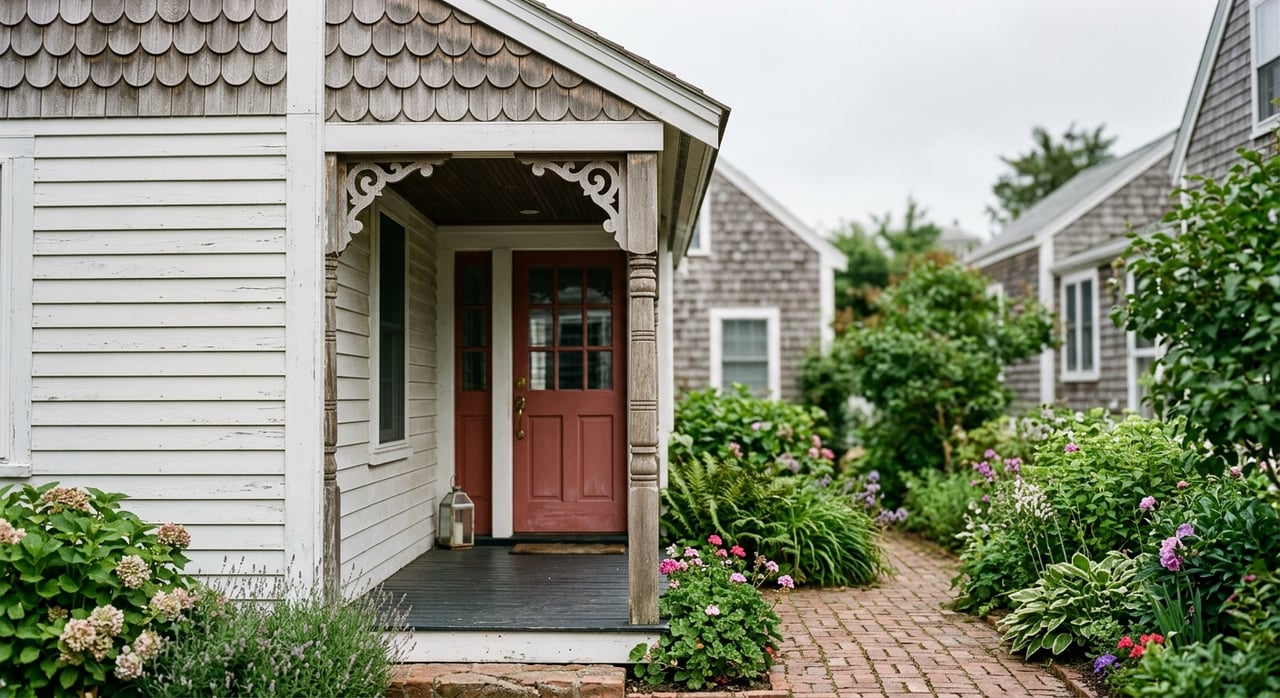
Oak Bluffs describes itself as a residential resort community, and its cottage history is a major part of that identity. The town was originally incorporated as Cottage City, and the Camp Meeting Grounds remain one of the most recognizable places on Martha’s Vineyard. Today, the Martha’s Vineyard Camp Meeting Association, or MVCMA, says 318 cottages remain in the Campground.
For many buyers, the Campground is the image that comes to mind first. It is a 34-acre historic circle of Carpenter Gothic cottages with deep roots in the Wesleyan Grove camp-meeting movement that began in 1835. The area is also a National Historic Landmark, which adds meaning and visibility, but also brings rules and responsibilities.
These cottages were originally designed to be small and efficient. National Park Service documentation describes a typical layout with two rooms on the first floor, a narrow stair, and sleeping quarters upstairs.
You will also see design elements like centered double doors, balconies, and front porches. The lots are compact, and private outdoor space is often limited. That close-set pattern is part of the charm, but it also shapes how the home lives day to day.
From the street, many cottages look similar in spirit. Under the surface, though, they can differ quite a bit.
National Park Service records note that some owners added shingling or insulated walls over time to improve weather protection or winter habitability. That means two cottages with similar curb appeal may offer very different comfort, efficiency, and upkeep needs.
One of the most important questions to answer early is whether the cottage is in the Campground or elsewhere in Oak Bluffs. That single detail can change how the property is owned, managed, and improved.
In the Campground, you are not buying the land in the standard fee-simple sense. According to MVCMA, the Association owns the land, and a buyer applies to become a leaseholder.
After closing, a new lease is generated. The process includes an application, a CORI background check, references, an interview with the Residential Lease Committee, and recording the sale with the Town of Oak Bluffs. Ownership changes involving family transfers or trusts must also be recorded with MVCMA and the town.
Outside the Campground, an Oak Bluffs cottage may have a more typical ownership structure. Even so, historic district rules can still affect what you can change on the exterior.
That is why buyers should not assume every cottage purchase works the same way. In Oak Bluffs, the legal structure matters just as much as the architecture.
In much of Oak Bluffs, exterior work is not just a matter of personal taste. Historic review may apply, and that can affect your renovation timeline, your budget, and even simple upgrade plans.
The Town of Oak Bluffs says property owners in the Cottage City Historic District need a Certificate of Appropriateness, Non-applicability, or Hardship when changing the style or materials of an exterior feature visible from a public way. The town also states that no building permit can be issued until the historic district certificate is granted.
Interior changes are not regulated by the district. That can create more flexibility inside the home, while leaving the public-facing exterior subject to review.
The Cottage City Historic District guidelines favor repair over replacement. They support painted wood siding and trim, wood windows and doors, historic roof shapes, and painted wood porches.
They also discourage vinyl and aluminum substitutes, along with visually intrusive mechanical equipment. In practical terms, that means your material choices may be narrower than they would be with a more standard cottage purchase.
For MVCMA cottages, the approval process does not stop with the town. MVCMA also requires a Certificate of Appropriateness for changes to historic cottages.
The Association notes that town permits are still required where applicable. Exterior painting does not require an MVCMA permit, but safe lead-paint practices must be followed.
If you love painted trim, gingerbread details, and classic wood porches, you are also signing up for a home that may need more regular attention. Oak Bluffs cottages are often rewarding to own, but they are rarely set-it-and-forget-it properties.
Because district guidelines emphasize painted wood materials and historic exterior features, these homes tend to be maintenance-sensitive. Trim, porches, roof edges, windows, and siding may all need periodic attention.
That does not mean every cottage is high maintenance in the same way. It does mean buyers should budget for upkeep and expect preservation-minded repairs rather than easy substitution with modern materials.
MVCMA construction rules can also affect scheduling. Between September and June, construction or repair work may be done Monday through Saturday from 8:00 a.m. to 6:00 p.m.
In July and August, only quiet repair work that does not require an MVCMA or Town permit may be done by the leaseholder or family, and power tools are not allowed. If you plan to coordinate contractors during peak season, that restriction is important to know in advance.
Many buyers are drawn to the idea of using an Oak Bluffs cottage in every season. That can be possible, but it depends heavily on the individual property.
Historically, Campground cottages were seasonal structures. National Park Service documentation notes features such as off-season shutters and later owner modifications like insulation.
That history matters because year-round comfort depends on what has already been updated. Before you buy, it is worth confirming the cottage’s insulation, weatherization, and overall adaptation for colder months.
Even when a cottage has been updated, the original floor plan still shapes daily life. Small rooms, narrow stairs, upper-level sleeping space, and compact lots may work beautifully for a seasonal retreat.
For full-time use, however, that same layout can feel tight depending on your needs. The right fit comes down to how you plan to live in the home, not just how charming it looks during a showing.
Some buyers hope summer rentals will help offset carrying costs. That may be possible, but Campground rules are specific and seasonal.
MVCMA states that Campground cottages may be rented only between April 1 and November 1. Rentals are limited to a maximum of six rental periods and no more than six weeks total.
Each rental must be at least seven consecutive days. Tenants and guests also must be preregistered at least 10 days in advance.
These limits can be meaningful if you are modeling future income. A cottage may still perform well for an owner who values selective seasonal use, but it may not suit a buyer expecting broad short-term rental flexibility.
That is one reason Oak Bluffs cottage due diligence should include both ownership and use. A beautiful house and a workable plan are not always the same thing.
Oak Bluffs remains a high-value, low-inventory market. Recent market trackers show different exact numbers, but they point in the same general direction.
Realtor.com’s March 2026 snapshot showed about 60 homes for sale, a median listing price of $1.75 million, median days on market of 74, and a median rent of $20,000 per month. Zillow’s April 30, 2026 data put typical home value at $1,253,402, with 36 homes for sale and a median list price of $1,467,500. Redfin reported a February 2026 median sale price of $1.5 million and homes selling in about 128 days.
Because these platforms measure different things, the numbers should not be treated as interchangeable. Still, the larger message is clear.
Oak Bluffs is an expensive market with limited inventory. In that kind of setting, a cottage’s condition, historic status, ownership structure, and presentation all matter.
Before moving forward, focus on practical questions rather than just aesthetics. In Oak Bluffs, the details behind the charm can shape your experience more than the first impression does.
Here are a few smart questions to ask:
For many buyers, the right cottage is the one that aligns with both your lifestyle and your tolerance for hands-on stewardship. When you understand the structure, rules, and upkeep ahead of time, you can buy with much more confidence.
Owning an Oak Bluffs cottage can be deeply rewarding. It offers history, personality, and a strong sense of place that is hard to replicate anywhere else on Martha’s Vineyard. If you want clear guidance on evaluating a Campground cottage, understanding local approval layers, or planning for ownership as a seasonal or remote buyer, The Agency Martha’s Vineyard can help you approach the process with care and clarity.
Stay up to date on the latest real estate trends.
We offer real estate services with heart. As a locally owned agency, we provide trusted guidance and personalized attention to help you navigate the Martha's Vineyard market.

OFFICE 205 UPPER MAIN ST EDGARTOWN MA 02539 PO BOX 275 EDGARTOWN MA 02539