Stewarding Larger Land Parcels In West Tisbury
April 16, 2026
April 16, 2026
If you own or are considering a larger parcel in West Tisbury, stewardship is not just a maintenance question. It is a long-term decision about how you want the land to function, how much care it will need, and how your plans fit within a town that places real value on open space, wetlands, woods, and working landscapes. Understanding that framework can help you protect the property’s character while making practical choices about fields, trails, privacy, and future planning. Let’s dive in.
West Tisbury is a distinctly rural part of Martha’s Vineyard. According to the Town of West Tisbury, it spans 34 square miles and includes extensive State Forest land, scenic beaches, farmland, and historic structures.
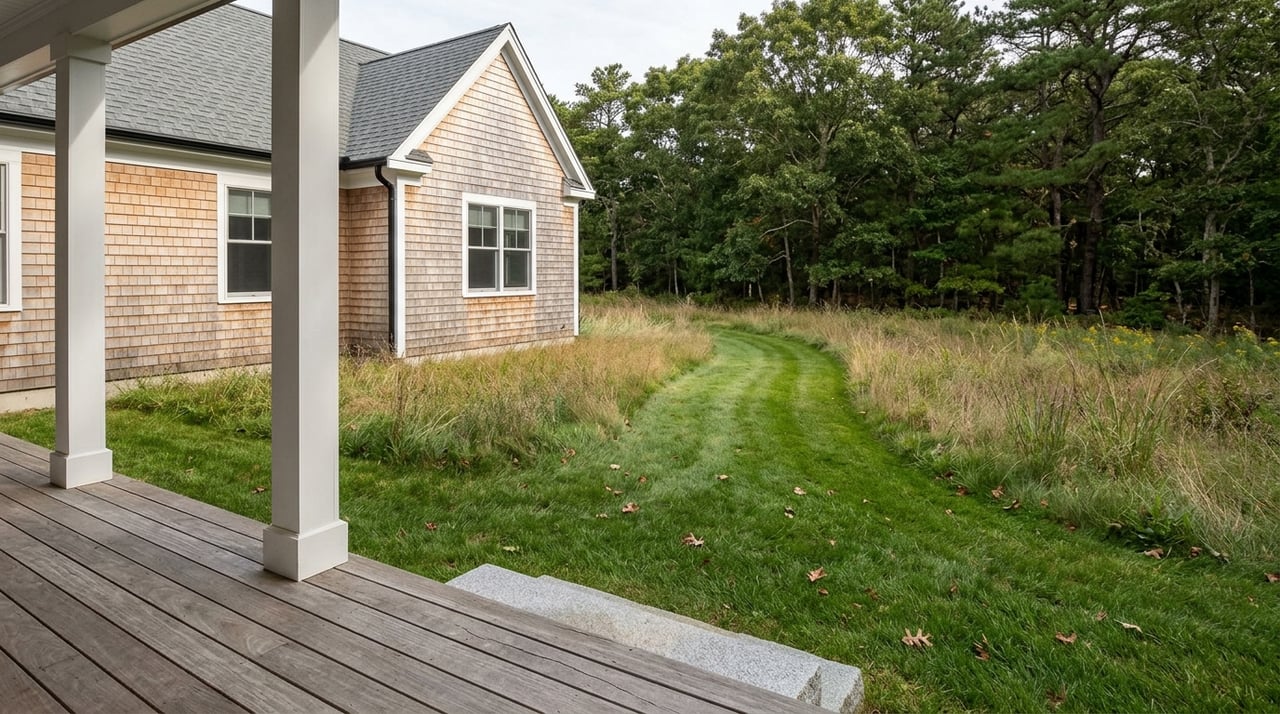
That setting shapes how larger parcels are viewed and managed. In West Tisbury, land stewardship often means thinking beyond a homesite and considering woods, meadows, wetlands, trails, and open-space value as part of the property itself.
The town’s zoning framework reinforces that approach. The West Tisbury Zoning Bylaws state that open-space development is intended to preserve open-space resources, and in those cases at least 60% of the land must remain open space.
The same bylaw recognizes meadows, farmland, woods, ponds, wetlands, beaches, trails, and trail corridors as conservation-value land. For you, that means stewardship decisions can affect not only appearance and usability, but also how a parcel fits into local land-use priorities.
One of the most useful first steps is deciding what you want the land to do over time. A larger parcel can serve many purposes at once, but clear priorities make it easier to plan maintenance and bring in the right professionals.
You may want to preserve open meadow, maintain wooded privacy, support wildlife habitat, create informal walking trails, or keep options open for future planning. In practice, most owners balance several of these goals rather than choosing just one.
This is especially important in West Tisbury because different parts of a parcel may call for different care. A field near the house may need regular mowing, while a woodland edge, wetland buffer, or trail corridor may benefit from a lighter touch and more careful monitoring.
On many larger West Tisbury parcels, one of the biggest questions is whether open land should stay open. Without regular management, fields and meadows often begin to revert to brush and eventually forest.
According to Mass Audubon’s grassland habitat guidance, owners and land managers can improve meadow, hayfield, and pastureland habitat through bird-friendly management. The same guidance notes that keeping fields open generally requires periodic mowing, brush cutting, or grazing.
For you, that means open land is rarely maintenance-free. If you value broad meadow views, a managed field edge, or a more open landscape around the home, it helps to plan for recurring care instead of a one-time clearing project.
That ongoing care can also help shape transitions between open and wooded areas. In many cases, the edge between meadow and forest is where a parcel’s privacy, habitat value, and visual character come together.
Routine monitoring matters as much as big seasonal cleanup. The Commonwealth of Massachusetts invasive plants guidance notes that invasive plants can spread through open fields, forests, wetlands, meadows, and even backyard landscapes.
That is why stewardship works best as an ongoing process. If invasive species are left unchecked, they can change the character of a field, crowd out native growth, and complicate future maintenance.
In practical terms, it is often smarter to build regular observation into your land-care plan. Walking the property seasonally and identifying trouble areas early can be more effective than waiting until clearing becomes more expensive and disruptive.
If your parcel includes substantial wooded acreage, stewardship usually benefits from a long view. The Massachusetts Forest Stewardship Program describes forest stewardship as a long-term, goal-oriented approach for private forest landowners.
Its planning framework considers soil and water, wildlife, recreation, climate, and forest products. The state also notes that only a Massachusetts Licensed Forester can write a Forest Stewardship Plan.
For larger holdings, that can be a valuable next step. A forester can help you think through selective clearing, woodland health, trail placement, storm impacts, habitat goals, and how to preserve the wooded character of the land without making reactive decisions year to year.
In West Tisbury, stewardship also connects to climate resilience. The town’s Climate Advisory Committee encourages planting local because established native plants generally need less care and water.
The committee also identifies wildfire as the town’s number one climate concern. That makes vegetation choices, woodland management, and landscape maintenance more than aesthetic decisions.
If you are planning improvements on a large parcel, native and locally appropriate planting can support a more durable, lower-input landscape. It can also align with the broader local emphasis on wetland protection, regenerative landscaping, and woodland preservation.
Many larger parcels naturally invite walking paths, cart paths, or simple internal trails. But trail stewardship is about more than cutting a route through the woods.
According to MassWildlife’s trails policy, trail maintenance can help protect resources by routing people away from sensitive areas and preventing informal reroutes that develop after blow-downs or erosion. The agency also notes that trails in rare plant communities or sensitive wildlife habitat can create conflicts with resource protection goals.
That is a useful model even on private land. A well-sited trail can improve access and enjoyment while reducing unnecessary disturbance.
The state’s DCR trail stewardship guidance offers another helpful framework. It recommends documenting a trail with a map, nearby hydrological or sensitive features, trail width and grade, and any pre-existing way the trail will follow.
If you are thinking about trails on a West Tisbury parcel, that kind of planning can help you avoid wet areas, protect existing landscape features, and create a route that feels intentional rather than improvised.
A common concern for owners is whether stewarded land must be publicly accessible. In West Tisbury, the answer is not always.
The town zoning bylaw specifically states that protected open space does not always have to be open to the public. That is an important point if you want to balance conservation goals with personal use, quiet enjoyment, and privacy.
The same bylaw still treats trails, beaches, beach access roads, and trail corridors as conservation-value land where appropriate. So while some parcels may include trail or recreation features, stewardship does not automatically mean public access.
Larger parcels often involve more than landscaping decisions. Depending on the property, wetlands, subdivision questions, permitting, trees near public ways, or open-space planning may all come into play.
The West Tisbury Conservation Commission oversees wetland resource protection under the Massachusetts Wetlands Protection Act, while the same town resource explains that the Planning Board handles master planning, subdivisions, zoning bylaw changes, special permits, and site plan review.
The town’s Community Preservation program can also support open space, historic resources, recreational use of open space, and affordable housing. For some owners, that makes it a useful local tool to understand early in the planning process.
If your parcel includes multiple landscape types or future planning options, it often makes sense to start conversations before making major changes on the ground. Early coordination can save time and help you avoid rework.
Most larger parcels benefit from a team approach. Depending on your goals, that may include a licensed forester, surveyor, and land or estate-planning professional.
The MassWoods professional directory is designed to help landowners find foresters, land trusts, surveyors, appraisers, and estate-planning professionals. For owners of substantial acreage, that is a practical starting point.
Local stewardship examples can also help you picture what long-term care looks like. On Martha’s Vineyard, organizations such as the Martha’s Vineyard Land Bank illustrate how trail management, meadow care, and conservation stewardship can be approached over time.
For buyers, that perspective is useful during due diligence. For owners and sellers, it can shape how a parcel is maintained, presented, and understood in the market.
A larger parcel in West Tisbury often carries both opportunity and responsibility. Clear stewardship can make the land easier to use, easier to maintain, and easier to evaluate whether you are buying, holding, or preparing to sell.
It also helps tell a more complete property story. Buyers of rural acreage are often trying to understand not just the house, but the condition, purpose, and long-term care needs of the land around it.
If you are evaluating a larger parcel in West Tisbury or preparing one for the market, working with a team that understands both property stewardship and island logistics can make the process much more efficient. For tailored guidance on rural acreage, property positioning, and on-island execution, connect with The Agency Martha’s Vineyard.
Stay up to date on the latest real estate trends.



We offer real estate services with heart. As a locally owned agency, we provide trusted guidance and personalized attention to help you navigate the Martha's Vineyard market.
OFFICE 205 UPPER MAIN ST EDGARTOWN MA 02539 PO BOX 275 EDGARTOWN MA 02539