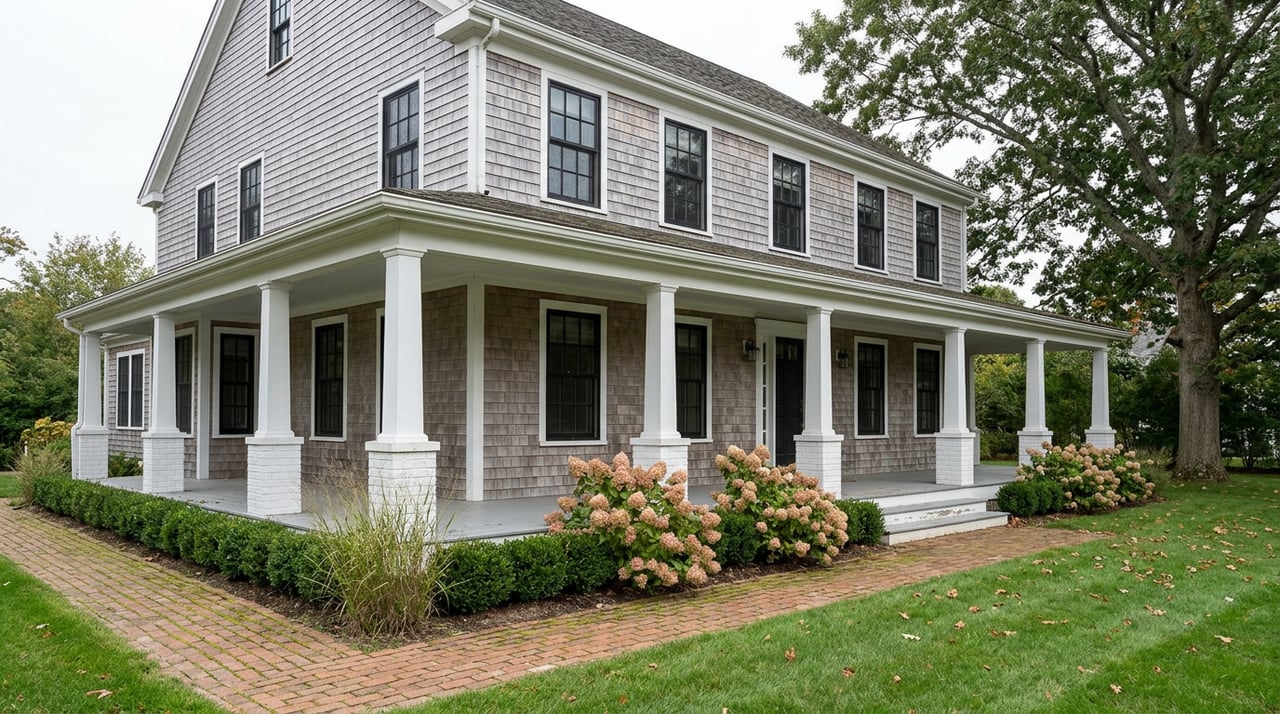
The Transfer Fee Bill Died in August. In Vineyard Haven, the Threshold Still Matters.
September 17, 2026
September 17, 2026
A real estate transfer fee bill for Martha's Vineyard failed to pass the Massachusetts legislature before the session closed at the end of July 2026. State Sen. Julian Cyr and Rep. Thomas Moakley will refile it when the new session opens in January 2027. For most of the island, that news barely changes the math. Nearly every closing in Chilmark or up-island Aquinnah clears a million dollars by such a wide margin that a fee applied only to the portion above a $1 million exemption would still land on almost the entire sale price. In Vineyard Haven, the arithmetic works differently, and that difference is the part of this story worth understanding before the bill comes back.
Every Martha's Vineyard closing already carries a transfer fee, and it has nothing to do with the legislation in Boston. The Martha's Vineyard Land Bank has collected a 2 percent fee on real estate transactions since 1985, funneling the proceeds into land conservation rather than housing. That fee has helped the Land Bank conserve more than 41 percent of the island, from walking trails to protected forest, according to reporting on the failed housing bill from the Martha's Vineyard Times.
In March 2026, the Land Bank commission voted to soften that fee for the first time in a specific way: properties carrying a permanent affordable housing deed restriction, capped for buyers earning up to 150 percent of area median income, can now be sold without paying the 2 percent transfer fee at all. Land Bank executive director James Lengyel framed the logic plainly in the Vineyard Gazette's coverage of the vote, arguing that a deed-restricted unit functions as a public asset and shouldn't be taxed like one. That single exemption tells you something about the direction island policy has been moving all year: toward carving out room for housing that stays affordable, funded by fees on everything that doesn't.
The transfer fee that failed this summer is a different animal, and it was never designed to fund conservation. Two companion bills, S.966 and S.2981, would have let Martha's Vineyard and Nantucket adopt a local-option fee of 0.5 to 2 percent on the portion of a home sale above roughly $1 million, with the money flowing into a new Martha's Vineyard Housing Bank dedicated to year-round housing. Voters in all six island towns had already approved the concept at town meeting. The bill cleared the Housing Committee that Cyr co-chairs and reached the Senate Ways and Means Committee, but it never made it into the Mass Wins Act that passed in July, and Cyr told Cape and Islands public radio that opposition from the statewide real estate lobby remains the primary obstacle.
The Massachusetts Association of Realtors has been consistent in its position, arguing in public comments that a transfer tax concentrates a burden on a narrow set of transactions rather than spreading it broadly, and that the revenue source is inherently unpredictable. Supporters point to a study released in May 2026 by the UMass Donahue Institute, commissioned by the Martha's Vineyard Commission and Nantucket's planning agency, which examined the Peconic Bay region of Long Island, including the Hamptons, as a comparable resort market that already runs a transfer fee. The study concluded the fee would not meaningfully suppress home sales and could generate roughly $9.9 million a year for the island's housing efforts. Cyr called the finding proof that "transfer fees in seasonal communities with a luxury real estate market work," while acknowledging the bill's fate now waits for the legislature to reconvene in 2027.
| Existing Land Bank Fee | Proposed Housing Bank Fee | |
|---|---|---|
| Status | In effect since 1985 | Failed to pass, refile expected January 2027 |
| Rate | 2 percent of sale price | 0.5 to 2 percent, local option |
| Applies to | Entire sale price | Portion above roughly $1 million |
| Funds | Land conservation | Year-round housing initiatives |
| Recent change | March 2026 exemption for deed-restricted affordable units | None yet, still pending |
Here is the part that gets lost when this story gets told as an island-wide policy debate. A $1 million exemption threshold is nearly irrelevant in a market where the typical sale is $3 million or $5 million. It is a live variable in a market where the typical sale sits close enough to that line that the exact cutoff decides whether a given closing pays the fee on a meaningful chunk of the price or barely at all.
Vineyard Haven's trailing twelve month median sale price sits at roughly $1.36 million as of spring 2026, up about 10 percent year over year. That is meaningfully below the island-wide median, which the Vineyard Gazette's year-end market recap put at nearly $1.7 million for 2025. Vineyard Haven's active inventory reflects that same lower center of gravity: listings there run from buildable land in the $500,000 range up through harbor and Lake Tashmoo waterfront properties above $5 million, a spread that includes far more transactions clustered near a $1 million line than you'd find in a town where the floor for a livable home starts well above it.
That distribution is not an accident of geography. Vineyard Haven is the town of Tisbury's downtown village, and it functions as the island's only year-round ferry port, which is part of why it carries a higher share of full-time, non-seasonal housing stock than villages built primarily around summer estates. A working harbor, a year-round grocery, and daily Steamship Authority service support a resident population that needs modestly priced housing stock in a way that Chilmark's rural acreage or Aquinnah's bluff-top lots generally do not. The practical result is that a meaningful share of Vineyard Haven's real deal flow, not its trophy listings but its everyday closings, would fall close enough to a $1 million exemption line that the legislature's eventual decision on where exactly to draw it will change outcomes for actual buyers here in a way it simply will not for most of the rest of the island.
None of this changes what a buyer owes today. The Housing Bank fee does not exist yet, and won't until the legislature revisits it in 2027 at the earliest. The fee that applies to every closing right now is still the Land Bank's 2 percent, calculated on the full sale price, with the narrow March 2026 carve-out for deed-restricted affordable units.
What is worth tracking, if you're comparing Vineyard Haven against other villages while you plan a purchase, is where the exemption threshold ultimately lands when the bill returns. A few things to keep in mind:
Is the Housing Bank transfer fee in effect right now? No. The legislation failed to advance before the 2026 session closed at the end of July, and Cyr and Moakley plan to refile it when the new session opens in January 2027. Until it passes and a town adopts it locally, it does not apply to any closing.
What fee do I actually pay on a Vineyard Haven purchase today? The Martha's Vineyard Land Bank's 2 percent transfer fee, which has applied to real estate sales across the island since 1985, funding conservation rather than housing. The one exception, added in March 2026, is for properties carrying a permanent deed restriction limiting resale to buyers at or below 150 percent of area median income.
Why does this matter more in Vineyard Haven than in Chilmark or Aquinnah? Because the proposed fee's exemption threshold sits close to Vineyard Haven's own median sale price, roughly $1.36 million as of spring 2026, while it sits well below typical sale prices in villages built primarily around larger estates and waterfront acreage. A greater share of Vineyard Haven's real transaction volume would fall near that line, which means the exact threshold lawmakers eventually choose has more practical weight here than almost anywhere else on the island.
Following legislation in Boston is not most people's idea of due diligence before a closing, but on Martha's Vineyard, where every transaction already carries a fee tied to state and island policy, it belongs in the same conversation as financing and title work. If you're weighing a purchase or sale in Vineyard Haven and want a clearer read on how the town's price bands, inventory, and the island's shifting fee landscape apply to your specific plans, Match Point Properties is glad to walk through it. Request a Local Consultation and get answers grounded in what's actually happening on the ground here, not just the headline numbers.
Stay up to date on the latest real estate trends.



We offer real estate services with heart. As a locally owned agency, we provide trusted guidance and personalized attention to help you navigate the Martha's Vineyard market.

OFFICE 205 UPPER MAIN ST EDGARTOWN MA 02539 PO BOX 275 EDGARTOWN MA 02539